


TL;DR
Build vs buy web scraping is a choice about who owns uncertainty. An API shortens the route to first data. An in-house platform gives you control and assigns maintenance to your team. A managed team provides coverage through a multi-engine escalation stack. Start with an API for stable sources. Hire a team for recurring mixed sources when you need the data, not a new infrastructure function. Build in-house when scraping is core intellectual property staffed as a product.
Introduction
A web scraping system consumes engineering time, vendor capacity, or managed delivery. Each path assigns cost and operational risk to a different owner. The choice depends on source complexity, freshness, control, maintenance tolerance, and the data's role in the business.
Comparing a parser with an API request misses much of the system. Production collection also needs scheduling, retries, session handling, validation, monitoring, storage, source-change response, and an escalation path for rejected requests.
The 2026 market offers three practical operating models:
- Build and operate the platform in-house.
- Buy access to a web scraping API.
- Hire a managed engineering team that already operates the underlying collection stack.
The decision is which organization should own the platform work at your current stage.
Compare the Three Operating Models
| Path | What you supply | What the path supplies | Hidden operating cost | Primary risk owner |
|---|---|---|---|---|
| Build in-house | Requirements, permanent engineering capacity, infrastructure, and operations | Custom logic and control built by your team | Source changes, hiring, platform work, incidents, and on-call | Your company |
| Buy an API | Integration, request orchestration, validation, and vendor management | Hosted request execution, browser or HTTP modes, network capacity, and extraction features | Usage growth, rate limits, unsupported workflows, and vendor dependence | Shared with the API provider |
| Hire a team | Requirements, acceptance criteria, governance, and downstream access | Custom integrations, a multi-engine escalation stack, monitoring, maintenance, and delivery | Scope coordination, knowledge transfer, and partner dependence | Shared with the managed team |
Table 1. Each operating model assigns work, hidden cost, and risk to a different owner.
Cost follows a different constraint in each path. In-house work consumes specialist attention. An API consumes metered capacity and integration effort. A managed team consumes delivery scope and coordination. Compare them against the same workload and acceptance criteria.
Building In-House Means Owning a Platform
A parser handles one page shape. A scraping platform keeps data flowing after sources change, traffic grows, sessions expire, or a protection layer changes its decision.
An internal team owns source adapters, scheduling, retries, request routing, browser capacity, validation, monitoring, alerts, and incidents. It also needs an abstraction for escalating difficult requests across a multi-engine stack. The operational responsibility remains inside the company.
This path gives you direct control over source logic, deployment, data residency, and internal integration. Your company also owns the code and operating model.
Build in-house when collection is core product intellectual property, the workload will persist, and leadership accepts a permanent engineering and on-call function. A short script maintained by one developer is not a platform.
Buying an API Moves Infrastructure Behind an Interface
Scraping APIs can expose HTTP requests, browser rendering, sessions, geolocation, browser actions, and extraction through one service. Their documentation defines request limits, concurrency, supported interactions, and response semantics. Your team still owns request design, output acceptance, business retries, and downstream quality.
The API path shortens a proof of concept or a small standard-source project. It lets a product team test demand before committing to a platform or managed engagement.
Cost follows usage and feature mix. Browser execution, interactions, network paths, and extraction features can consume more capacity than plain HTTP. Source mix can change cost efficiency even when request volume stays flat. Rate ceilings also shape throughput.
Use representative sources in the pilot. Measure accepted records, completed refreshes, latency, retry volume, and manual intervention. Pinobyte's web scraping tools comparison covers the vendor and tool layer in more detail.
Hiring a Team Buys an Operating Capability
A managed team combines scraping specialists with an existing collection platform. Pinobyte differs from a general development team by specializing in these systems and building each project on its in-house engine. The engine supplies request routing, browser execution, sessions, retries, validation, and monitoring, which shortens the work needed for a production deployment.
The client defines sources, fields, freshness, acceptance rules, and delivery contracts. Pinobyte implements source logic, operates the multi-engine escalation stack, monitors runs, and repairs integrations.
You can test the engine in the Pinobyte Playground by sending a URL and inspecting the rendered page and raw HTML.
Initial delivery typically ranges from about two weeks for a small project to three months for a large one, depending on source access and validation.
One published case covers a self-hosted scraping API built for a residential-proxy provider. Its four-engine stack handles more than eight anti-bot systems and returns repeat requests roughly 10 times faster.
The client approves data definitions, policy decisions, downstream access, and incident priorities.
Decision Radar for a Medium Recurring Program
Score each path from 1 for a weak fit to 5 for a strong fit. This planning baseline represents a medium recurring program with mixed sources, frequent refreshes, and operational data.
| Decision dimension | Build in-house | Buy an API | Hire a team |
|---|---|---|---|
| Time to reliable data | 2 | 5 | 4 |
| Complex-source coverage | 4 | 3 | 5 |
| Customization and control | 5 | 2 | 4 |
| Low internal maintenance burden | 1 | 5 | 4 |
| Scale readiness | 3 | 4 | 5 |
| Portability and low vendor dependence | 5 | 2 | 4 |
| Relative cost efficiency | 2 | 3 | 4 |
Table 2. Editable 1-5 fit scores for a medium recurring scraping program.
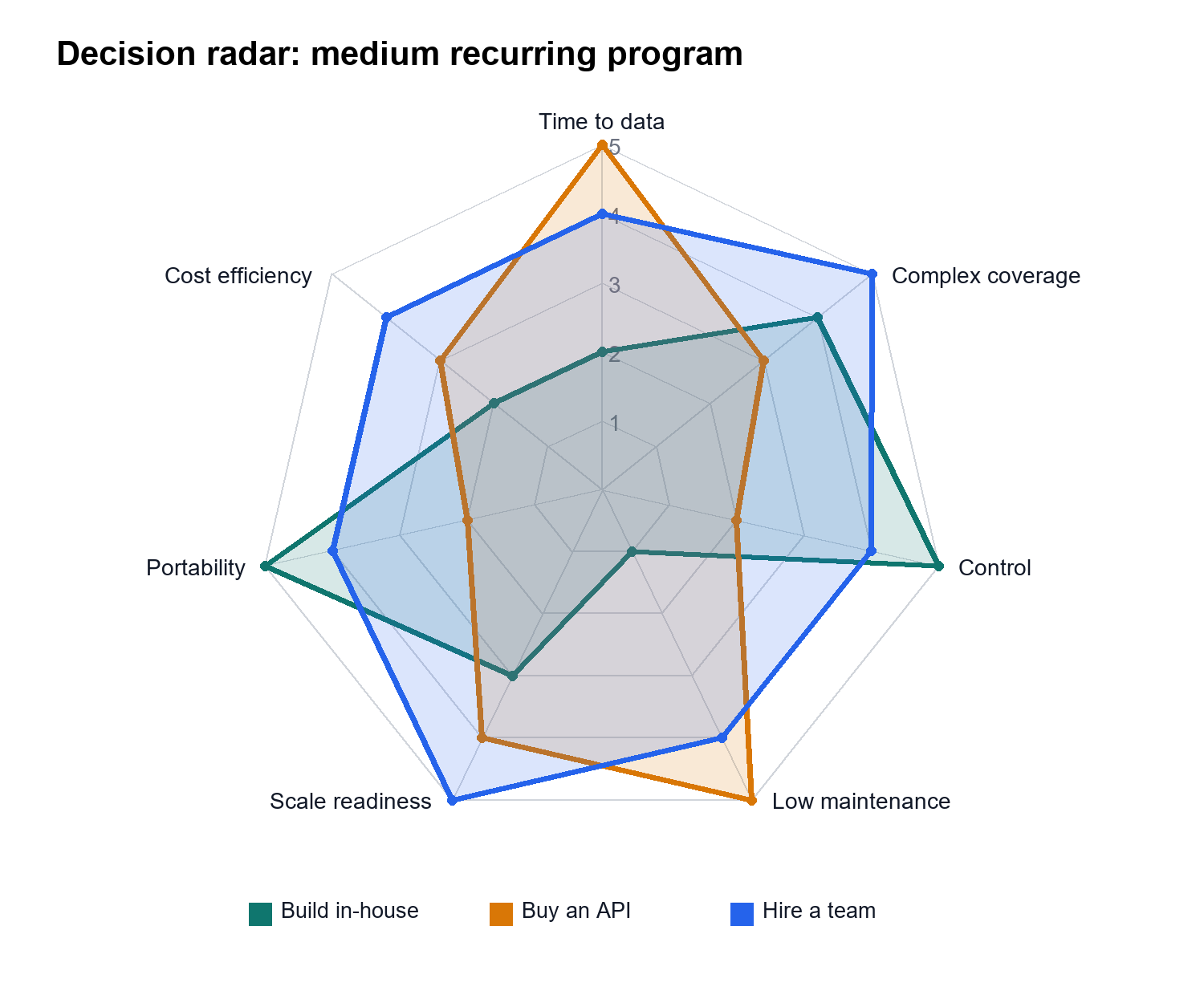
Figure 1. The editable baseline favors different operating models on different dimensions.
The radar makes the trade visible. In-house ownership favors control and portability at the cost of time and maintenance. An API favors speed and low internal burden. A managed team combines coverage and operational relief with custom behavior.
Adjust the scores to your facts. An experienced scraping team raises the in-house time and cost scores. Stable public pages raise the API coverage score. The scoring must reflect the real source set.
Small, Medium, and Large Scenarios
| Scenario | Operating profile | Recommended starting path | Managed delivery reference | Reconsider the choice when |
|---|---|---|---|---|
| Small | A few stable sources, scheduled collection, limited custom behavior, and no strict SLA | Buy an API | About 2 weeks | Custom rules, protected sources, or manual repairs become routine |
| Medium | Mixed static and protected sources, frequent refreshes, and business workflows that depend on the data | Hire a team | About 1 month | Collection becomes core product IP or the source set becomes simple enough for a generic API |
| Large | High volume or many protected sources, strict freshness, monitoring, and on-call requirements | Build in-house when the platform is strategic; hire a team when the company wants the outcome | About 3 months | Ownership, compliance, or long-term platform strategy changes |
Table 3. Small, medium, and large projects favor different starting paths.
The labels describe operational complexity, not company size. One protected source with strict freshness can demand more engineering than many stable pages. Classify the project by a difficult representative source.
When Each Path Wins
Build in-house
Choose an internal platform when scraping differentiates the product, sources require deep customization, and the company needs direct control over deployment and data handling. Leadership must fund maintenance and assign an on-call owner.
Buy an API
Choose an API for a fast proof of concept when sources fit standard request or browser workflows and usage remains within documented limits. Keep acceptance tests under your control so you can detect incomplete or stale data.
Hire a managed team
Choose Pinobyte's managed team when business-critical sources need custom treatment and a permanent scraping organization would distract from the product. Its specialists build on an in-house engine with proven routing, browser, validation, and monitoring.
Pinobyte's data scraping service describes this delivery boundary from feasibility assessment through deployment and ongoing maintenance.
A Practical Selection Process
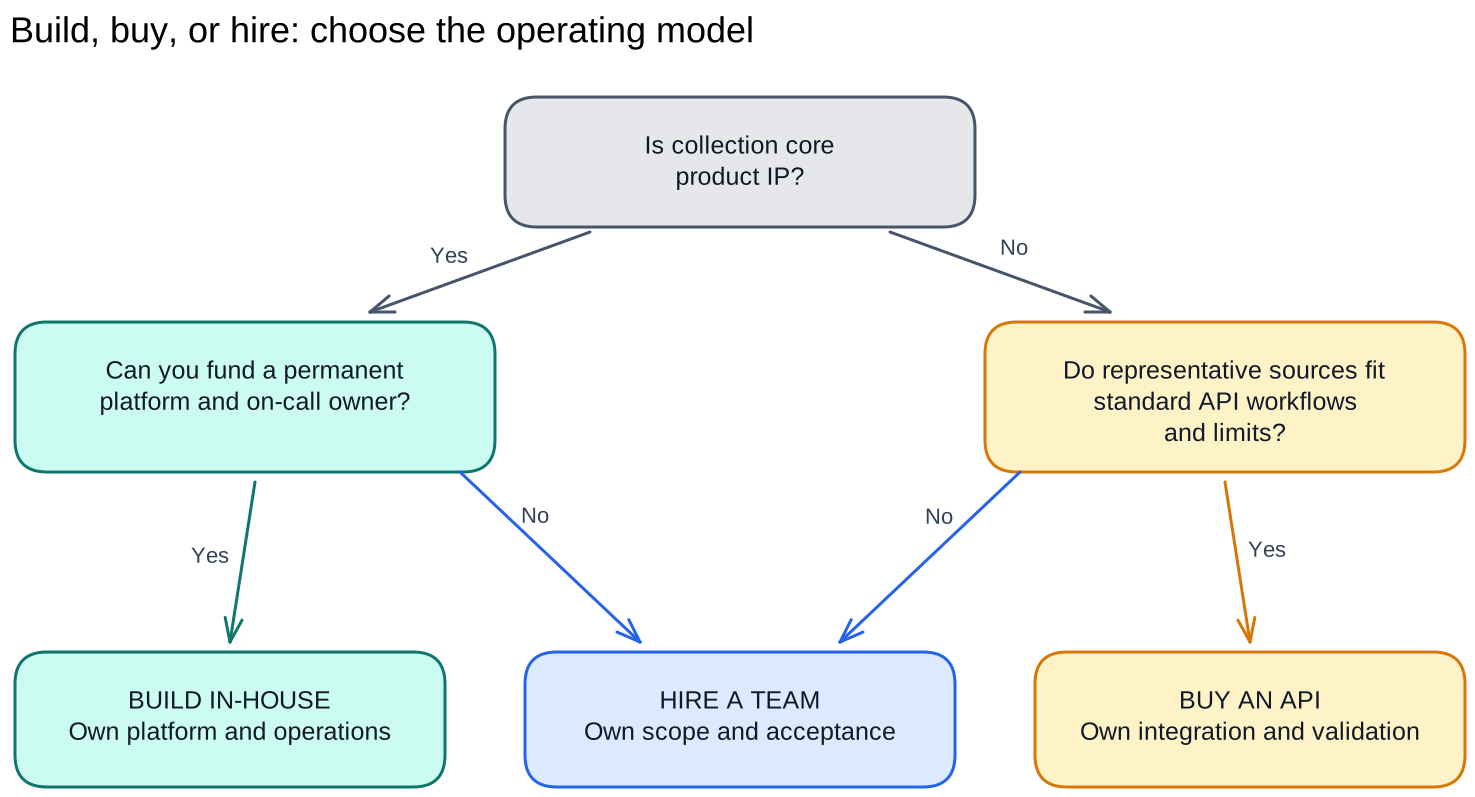
Figure 2. Product ownership and representative-source fit determine the starting path.
Pilot a representative set: one stable source, one dynamic source, and one difficult source. Define accepted output, freshness, latency, retry limits, and manual intervention before testing.
Run the same checks across all three paths. Record time to reliable data, complex-source coverage, maintenance hours, scale behavior, portability constraints, and relative cost efficiency. Frequent manual repair belongs in the cost score.
Review the decision when volume, source mix, compliance, or product strategy changes. An API integration can grow into a managed program. A managed program can justify an internal platform once collection becomes core intellectual property.
Conclusion
Build vs buy web scraping has three credible answers in 2026. APIs reduce setup time for standard workloads. Internal platforms provide control when collection is strategic. Managed teams cover the middle by combining custom engineering with an existing operating stack.
Assign ownership for maintenance, incidents, source changes, and data acceptance. Test the choice against the real source set. One published Pinobyte platform handles eight sources and one million requests per day.
FAQ
Is a web scraping API cheaper than building in-house?
It depends on volume, source difficulty, feature use, and internal maintenance. Compare relative cost efficiency across the full workflow, including integration, validation, retries, incidents, and source repairs. An API can be efficient for a small standard workload while an internal or managed platform can fit recurring complex collection.
How long does a managed web scraping project take?
Pinobyte uses about two weeks for a small project, one month for a medium project, and three months for a large project as initial planning references. Source complexity, acceptance rules, security review, and downstream integration determine the final schedule.
When should a company build web scraping in-house?
Build in-house when collection is core product intellectual property, the company needs direct control, and leadership will maintain a permanent engineering and on-call function. A one-time implementation budget is not enough.
Can a scraping API handle protected or JavaScript-heavy sources?
Many APIs provide browser rendering, sessions, geolocation, interactions, and structured extraction. Coverage depends on the source and workflow. Test representative sources and measure accepted data before committing.
What should a web scraping proof of concept measure?
Measure accepted records, refresh completion, latency, retry volume, manual intervention, complex-source coverage, and maintenance effort. These metrics expose whether the chosen path can support production operations.

